RFID Wristbands Integrated with Biometrics & Blockchain: A New Era of Secure Access and Cashless Pay
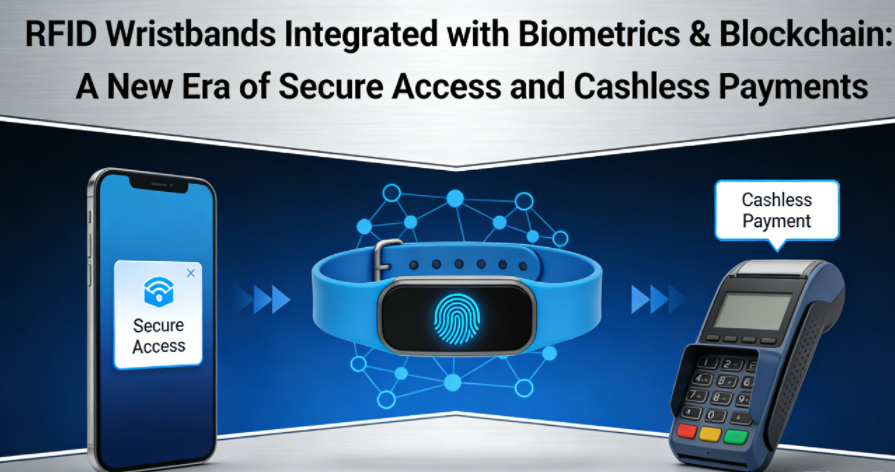
The global market for secure access control and cashless transaction solutions is witnessing a transformative shift, as RFID wristbands integrated with biometric authentication and blockchain technology emerge as a game-changing innovation. This convergence addresses long-standing pain points in industries ranging from hospitality and healthcare to events and travel, offering unparalleled security, convenience, and transparency while redefining user experiences.
Traditional RFID wristbands have long been a staple in crowd management and cashless operations, but their vulnerability to counterfeiting and data breaches has limited their adoption in high-security scenarios. By combining RFID technology with biometric identifiers—such as fingerprint recognition, vein scanning, and even facial recognition—and anchoring the data to immutable blockchain ledgers, tech providers are creating a multi-layered security ecosystem that eliminates fraud and enhances trust.
“The integration of biometrics and blockchain into RFID wristbands solves two critical challenges: ensuring that only authorized individuals can access restricted areas or make payments, and guaranteeing that every transaction and access event is traceable, unalterable, and transparent,” said Emma Carter, senior analyst at Global Tech Insights. “This trifecta of technologies is particularly resonant in post-pandemic environments, where safety, efficiency, and data privacy have become non-negotiable.”
In the hospitality sector, major hotel chains in Europe and Asia have already begun piloting these advanced wristbands. Guests can now check in seamlessly, access their rooms, and make on-site purchases—from restaurant meals to spa services—with a simple tap, while their biometric data (encrypted and stored on the blockchain) ensures that the wristband cannot be shared or duplicated. A leading luxury resort in the Maldives reported a 40% reduction in fraudulent access attempts and a 25% increase in cashless transaction volume within the first month of deployment.
Healthcare is another key sector benefiting from this innovation. Hospitals and clinics are adopting the integrated wristbands to streamline patient access to restricted areas (such as operating rooms and medication storage), authenticate medical staff, and securely process co-pays and facility fees. By leveraging blockchain’s distributed trust mechanism, patient data—including biometric identifiers and transaction records—is protected from unauthorized access, complying with strict regulations like HIPAA in the U.S. and GDPR in the EU. A recent pilot at a tertiary hospital in Germany found that the technology reduced administrative errors by 35% and improved patient data security by 60% compared to traditional systems.
Event management is also seeing rapid adoption, as organizers seek to balance security with attendee experience. At large-scale music festivals and sports events, the wristbands enable frictionless entry, real-time crowd tracking, and secure cashless payments, while blockchain ensures that ticket fraud—a $1 billion annual problem globally—is virtually eliminated. A major music festival in the U.S. used the technology during its 2026 edition, reporting zero counterfeit wristbands and a 30% faster entry process compared to previous years.
Technological advancements are driving broader accessibility. Recent breakthroughs in low-power biometric sensors and lightweight blockchain protocols have reduced the cost of these wristbands by 20% over the past year, making them viable for small-to-medium enterprises as well. Additionally, the integration of privacy-enhancing technologies like zero-knowledge proof (ZKP) ensures that biometric data is “available but not visible,” addressing concerns about data misuse and compliance with global privacy laws.
Market projections suggest strong growth ahead. According to a new report from TechForecast, the global market for RFID wristbands integrated with biometrics and blockchain is expected to grow at a CAGR of 38% between 2026 and 2030, reaching $8.7 billion by the end of the decade. Key drivers include increasing demand for secure cashless transactions, rising concerns about data breaches, and the expanding adoption of smart technologies in hospitality, healthcare, and events.
“We’re entering a new era where wearables are no longer just convenient—they’re secure by design,” said Michael Chen, CEO of a leading RFID technology provider. “By combining biometrics and blockchain, we’re not just preventing fraud; we’re building trust between businesses and their customers. This technology has the potential to disrupt every industry that relies on access control and cashless payments, and we’re only beginning to see its full potential.”
As regulatory frameworks for biometric data and blockchain continue to evolve, industry experts expect further innovation—including the integration of AI for real-time fraud detection and the expansion of cross-chain interoperability, making these.
More information,please contact our sales team :Sales@hanflyrfid.com.